New Funds for Local and Regional Food System Development: Farmers Markets, Food Hubs, and More!

Author: Kate Fitzgerald
Local and regional food sales now account for about $7 billion per year, according to the USDA, and Farm Bill spending in the new Agricultural Act of 2014 (Farm Bill) reflects the growing importance of this sector of America’s farm economy.
Overall, the new Farm Bill increases funding to improve access to healthy food, build regional food infrastructure, and support organic agriculture by more than $500 million. Past blogs explained new Farm Bill provisions for beginning farmers, healthy food access, and the new Food Insecurity Nutrition Incentive program (FINI). Here we will concentrate on two USDA programs that can support the development of local and regional markets.
Farmers Market and Local Food Promotion program (FMLFP). The 2014 Farm Bill triples the funding for and renames the existing Farmers Market Promotion Program (FMPP) to allow grants to support regional food system infrastructure, as well as direct marketing programs for farmers.
USDA is accepting applications for these funds starting TODAY. Check out the press release for more information. USDA is also hosting two webinars next week: May 13 will dig into Farmers Market Promotion Program (FMPP) Grants; May 14 will share more information on the Local Food Promotion Program.
The new program will have $30 million/year through 2018, half of which will continue to fund farmers building viable direct markets. An additional $15 million/year will be available to establish, improve, or expand initiatives that support small and mid-sized producers selling into regional wholesale and institutional markets.
Farmers markets
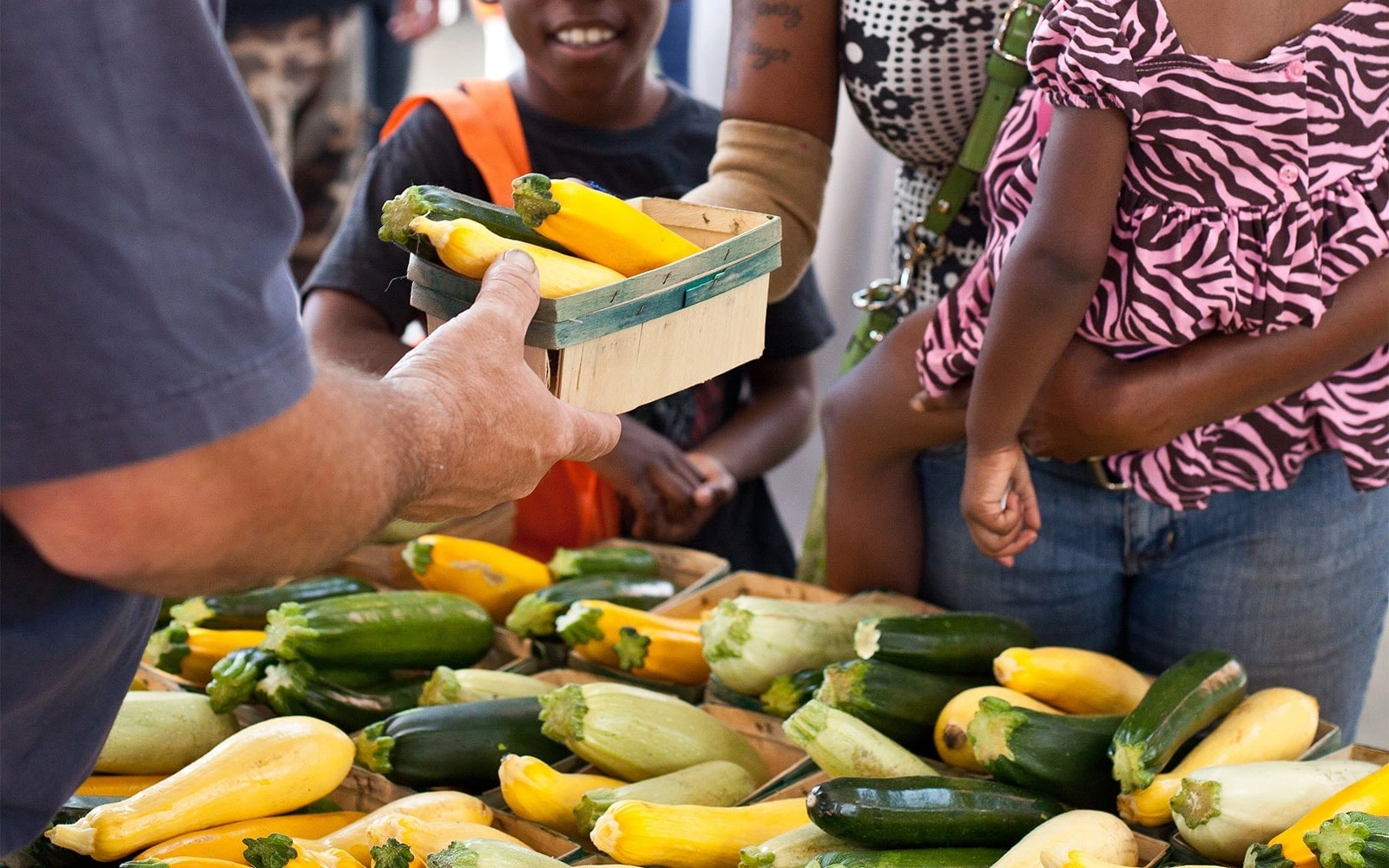
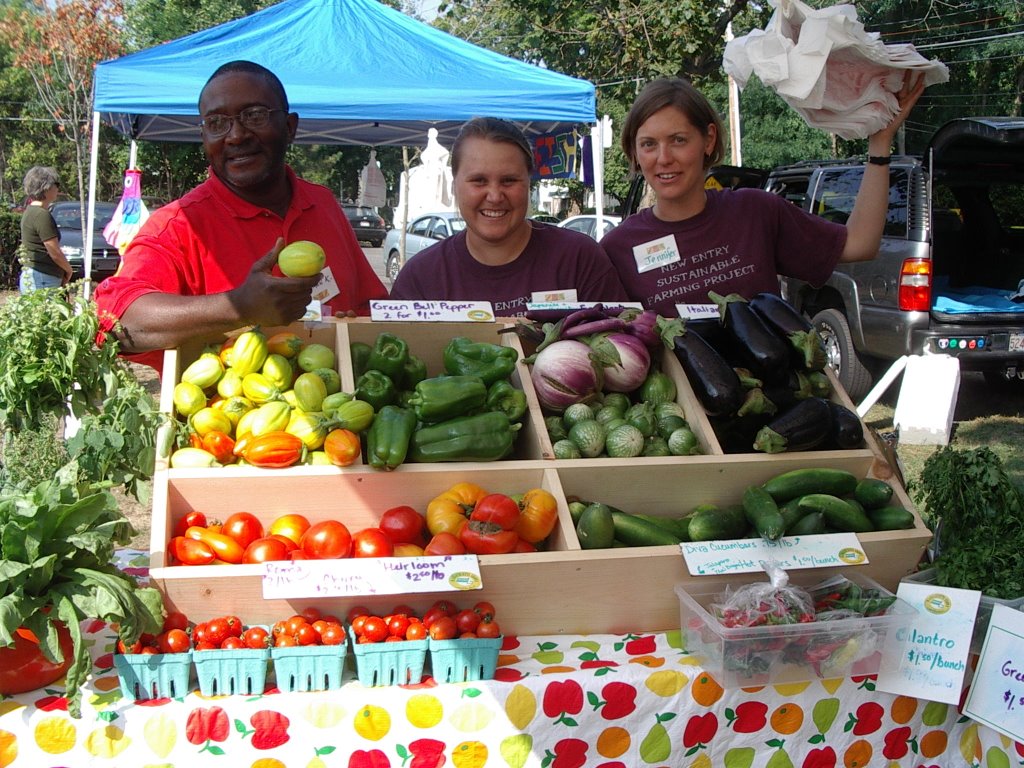
Nearly 150,000 farmers and ranchers sell directly to consumers in the U.S. There are now more than 8,000 farmers markets, 12,000 community supported agriculture farms (CSAs), and many mobile markets selling $1.3 billion in farm fresh products across the country.
Many of these used FMPP grant funding to make the transition from startup to financial stability, to expand their size and the services they offer, and to provide training to farmers and market managers. (See the Farmers Market Coalition site for a good report on FMPP-funded efforts.) The Farm Bill’s expanded FMLFPP will continue to provide grants for these services and also do more.
Infrastructure grants for regional food systems
Increasingly, consumers desire to know where their food comes, and this has sparked the interest of schools, universities, hospitals, and other businesses in buying more regional ingredients. The new demand has highlighted a gap in the American food system: we can move broccoli from California’s Central Valley to a public school in St. Paul, Minnesota, for example, but we cannot efficiently deliver Michigan apples to Michigan hospitals.
FMLFPP’s expanded authority in this year’s Agricultural Act is designed to remedy this deficit. The new $15 million/year can be used to develop, improve, and expand infrastructure to help move regionally produced foods to area institutions and retailers and to provide necessary training and technical assistance to new organizations and entrepreneurs along the supply chain.

Detroit Eastern Market, Shed 3
There are several existing programs at USDA that can be used for regional food projects. What distinguishes FMLFPP is that the primary goal is to increase opportunity and farm income for small and mid-sized farms specifically by connecting them to regional markets. The emphasis is on developing new markets for producers. Ideally this program can work in concert with the Farm to School, Community Food Projects, or other grant programs.
Financing regional food businesses
Business and Industry Loan Guarantee program (B & I). Affordable financing is crucial to develop businesses that support vibrant regional food systems. USDA’s B & I program can be helpful for entrepreneurs who have identified lenders interested in their projects but who might need added assurances to obtain a loan. (Note that this is not a USDA direct lending program.)
The B & I program is administered by USDA’s Rural Development agency, but can make guarantees for loans to businesses in urban areas if the business will create a “meaningful benefit” in nearby rural communities and if the business is providing healthy, locally, or regionally sourced food in underserved urban communities. Once a lender has agreed to make the loan, the borrower and bank can apply to USDA for a B & I loan guarantee. USDA will guarantee 80 percent on loans of less than $5 million, and 70 percent on loans of between $5 million and $10 million.
Here’s some examples: B & I regional food system loan guarantees have been used to expand a rural co-op grocery store in North Carolina and an Iowa facility to process local farm products.
Check out the USDA press release to learn more about these new funds.
Stay tuned next week for a breakdown of the 2014 Farm Bill’s support for organic agriculture.
Read previous blogs in this Farm Bill series, including:


Stay Fresh
Sign up for our updates to stay informed about our latest programs, read inspiring stories of impact, and how you can become an important part of the movement. See what’s possible when we start with food.
By signing up you will receive occasional emails from Fair Food Network. We never share your information. You can unsubscribe anytime.