Carrots over Sticks: Changing Eating Habits for Better Health and a Stronger Economy

Author: Oran B. Hesterman
Source: Altarum Health Policy Forum
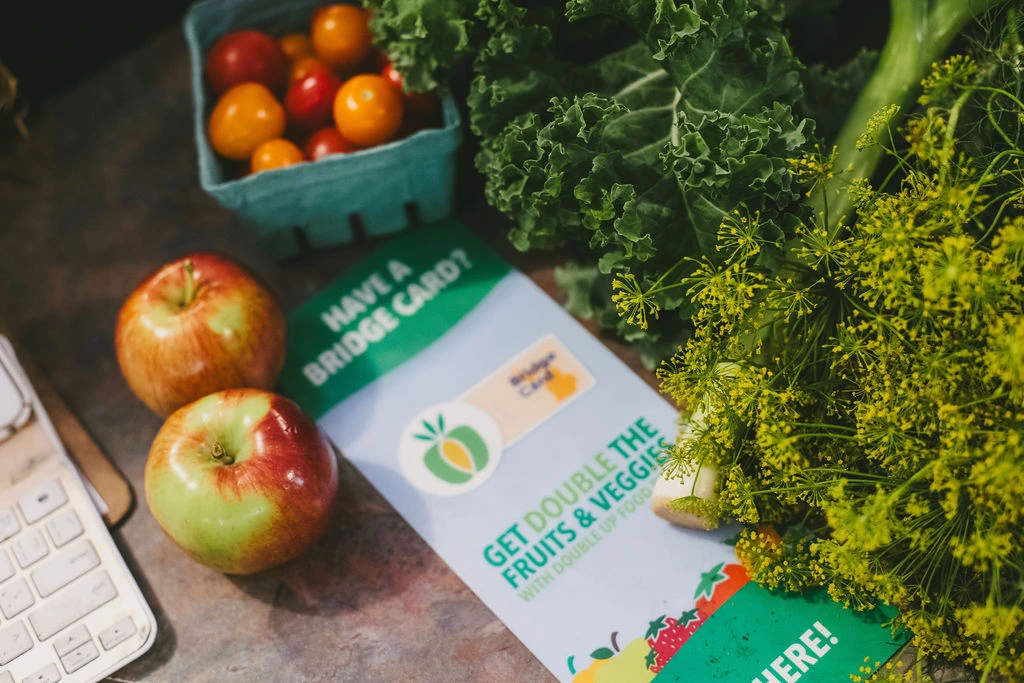
Conventional wisdom says that to change behavior you need to use both a carrot and a stick. Fair Food Network’s Double Up Food Bucks Program (DUFB) demonstrates that even small incentives will change food purchasing and consumption habits.
DUFB is a healthy food incentive program that uses funds raised from foundations and corporations to match purchases made by low-income shoppers at farmers’ markets in Michigan.
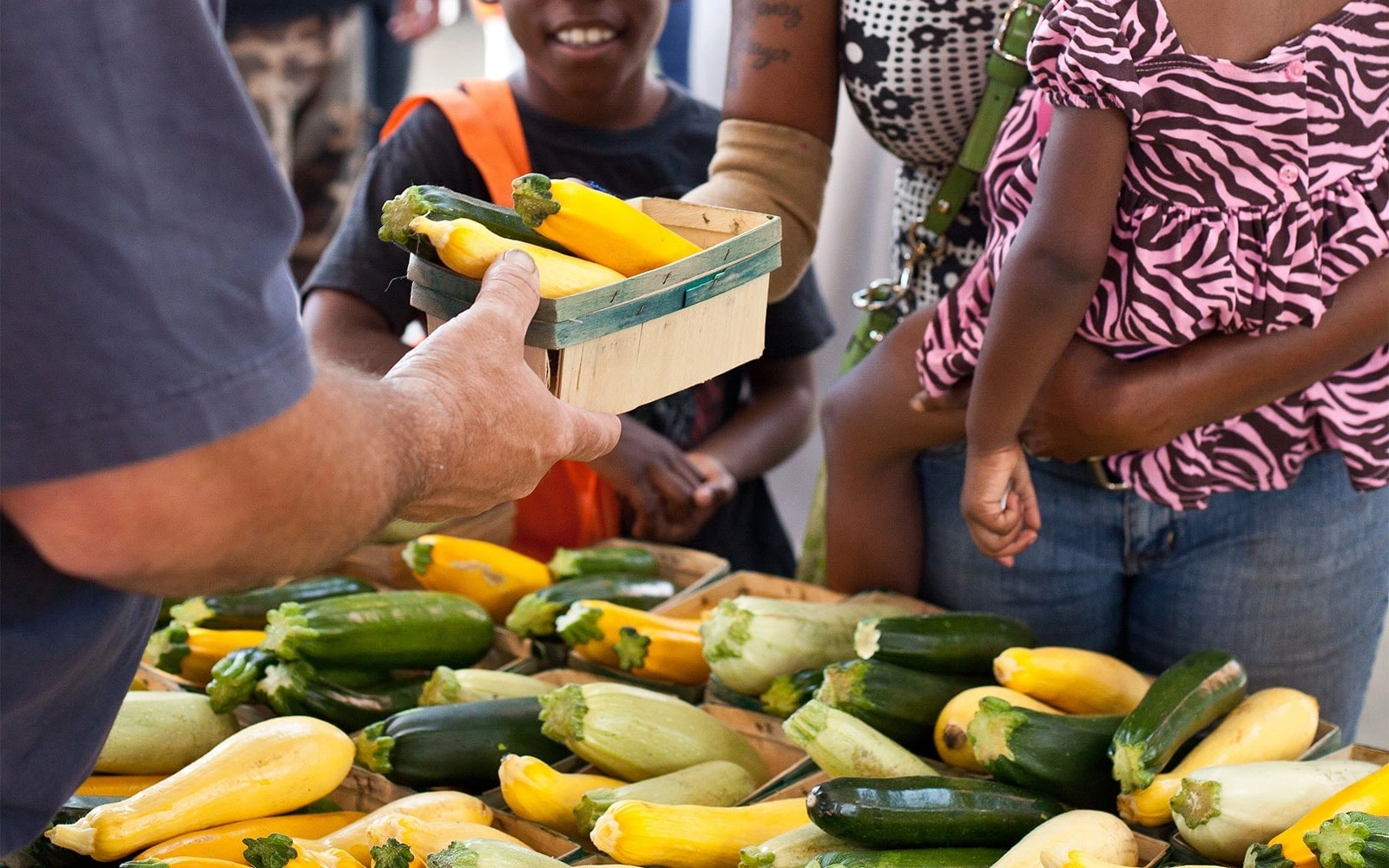
When customers on federal food assistance (SNAP, formerly food stamps) use their benefits at farmers’ markets, they receive an equal amount of tokens, up to $20 per visit, to use at the market to purchase fresh locally-grown produce. As a result, delicious local carrots and broccoli, apples, and pears, and a huge variety of other produce are accessible for the SNAP recipients who take advantage of the program.
Double Up Food Bucks: An Incentive Program That Works
Rather than restricting dietary choices for low-income shoppers receiving federal benefits, as has been suggested by New York City’s Mayor Bloomberg and others, DUFB provides incentives for shoppers to purchase fresh fruits and vegetables, improving the affordability of produce for people living in food deserts–urban and rural areas where fresh food is difficult to find and expensive when available. DUFB also improves consumers’ diet and reduces the risk of diet-related chronic illness, while supporting Michigan’s family farmers and rural communities.
DUFB began in 2009 as a pilot project at Detroit’s Eastern Market and four other farmers’ markets in the city. It expanded to 54 markets by 2011, and by the summer of 2012 was available at more than 100 sites, including farmers’ markets, farmstands, and mobile produce trucks. Tens of thousands of Michigan and Toledo, Ohio residents and hundreds of local farmers participate in the program. Between June and November 2012, approximately 500 farmers sold more than $1.9 million worth of fresh Michigan produce for combined DUFB and SNAP dollars , there were more than 89,000 DUFB customer visits to the participating markets, and more than 13,000 of these were first-time farmers’ market customers.

DUFB Results over Time
Double Up Food Bucks and Grocery Stores: New Partnerships
Unfortunately, multiple barriers prevent low-income consumers from accessing farmers’ markets, such as lack of adequate transportation: according to USDA, less than 0.002% of SNAP purchases are made at farmers’ markets, so for more SNAP recipients to purchase more fresh produce using DUFB, we must bring the program to places where most people typically shop – grocery stores.
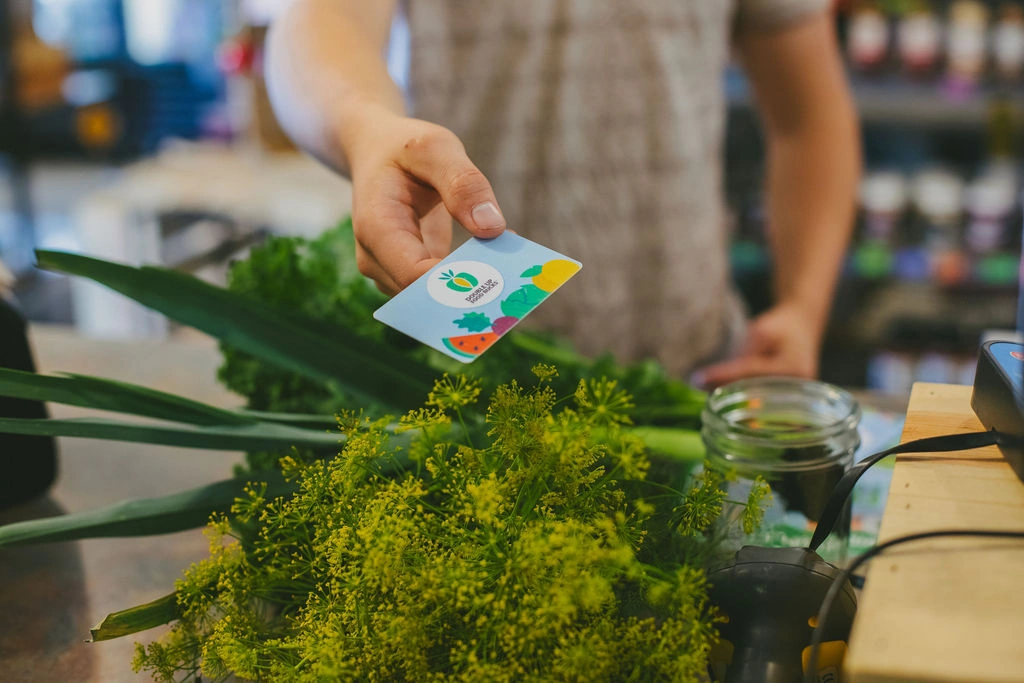
For DUFB to make an even more positive impact in the Detroit community, FFN has launched a pilot program to expand DUFB beyond farmers’ markets to grocery stores, doubling the purchasing power of a whole new cadre of shoppers: the stores participating in the pilot are located in areas of the city that have a high number of SNAP recipients who have limited access to farmers’ markets. Instead of tokens, these grocery stores will introduce an electronic card to record benefits that can be spent on Michigan-grown produce, continuing to help Michigan farmers increase their farm income while providing healthy, local food to inner-city residents.
Another project FFN has initiated to provide greater access to healthy food is the Detroit Grocery Incubator project. More than half a million Detroit residents live in areas with limited or no access to grocery stores. Many of the city’s low-income residents must travel long distances for affordable high-quality groceries, a burdensome trip that can become a major obstacle to eating a healthy diet. The Detroit Grocery Incubator Project helps local entrepreneurs obtain the training and experience they need to open independent grocery stores, increasing the options for healthy, fresh food in Detroit neighborhoods. The project attempts to create a strong entrepreneurial infrastructure to stimulate growth and economic stability in hard-hit Detroit neighborhoods. Both the expansion of DUFB into grocery stores and the Grocery Incubator project are aimed at increasing the number of these valuable sources of fresh, healthy food in underserved communities.
The Policy Implications of Double Up Food Bucks
As of October 2012, there were 47.5 million Americans receiving federal SNAP benefits. The cost of this program for federal fiscal year 2012 was $74.6 billion, which translates into billions of dollars of food purchases nationwide. FFN is committed to changing public policy to better utilize this stream of resources: coupled with a federally funders DUFB-style program, SNAP could be a powerful lever to improve the food system, incentivize healthier eating habits for low-income shoppers, and create jobs and economic opportunity at the same time.
In the 2012 Senate Farm Bill, championed by Michigan Senator Debbie Stabenow, there was a $100 million provision to create a national pilot program based on Fair Food Network’s DUFB program. FFN is working with an extensive coalition of non-profit organizations, foundations, associations and business enterprises to ensure that a DUFB-type of program will be incorporated into the next Farm Bill. Since about half of all SNAP recipients are children under the age of 18, if they are introduced to fresh, local food at a young age, they will develop positive eating habits that will serve them, their communities, and the country, for a lifetime. Yes, the carrot over the stick, every time.
Originally posted on January 23, 2013 at Altarum Institute’s Health Policy Forum.


Stay Fresh
Sign up for our updates to stay informed about our latest programs, read inspiring stories of impact, and how you can become an important part of the movement. See what’s possible when we start with food.
By signing up you will receive occasional emails from Fair Food Network. We never share your information. You can unsubscribe anytime.