Close Flyout

Highlight

Grocery as a Force for Good: Investing in the Future of Food Retail

fnn-michigan-purple

Michigan

Grocery stores do more than stock shelves — they nourish neighborhoods, fuel local economies, and connect people to vital resources. As essential cornerstones of thriving communities, the impact of grocery retail is greatest when it reflects the values, needs, and leadership of the people it serves.

But in many places, keeping grocery stores open takes sustained effort and support. Big-box retailers often move in with deep discounts, only to leave when margins shift — creating food access gaps that can take years for communities to fill. In this landscape, independent grocers are stepping up with new models that are more than just stopgap solutions — they’re durable, innovative approaches grounded in local leadership and ownership.

From co-ops and community-owned markets to farmer-led consignment models, these retailers are helping define the future of food access.

“We’re proud to invest in these businesses and connect them with the resources they need to grow — whether that be financing, technical assistance, or the opportunity to provide our Double Up Food Bucks program,” said Fair Food Network Retail Specialist, Charles Walker.

Ultimately, we’re working to ensure that families facing barriers can afford the fresh fruits and vegetables they need and want — right where they already shop.”

In 2025, we saw this vision in action across Michigan and beyond.

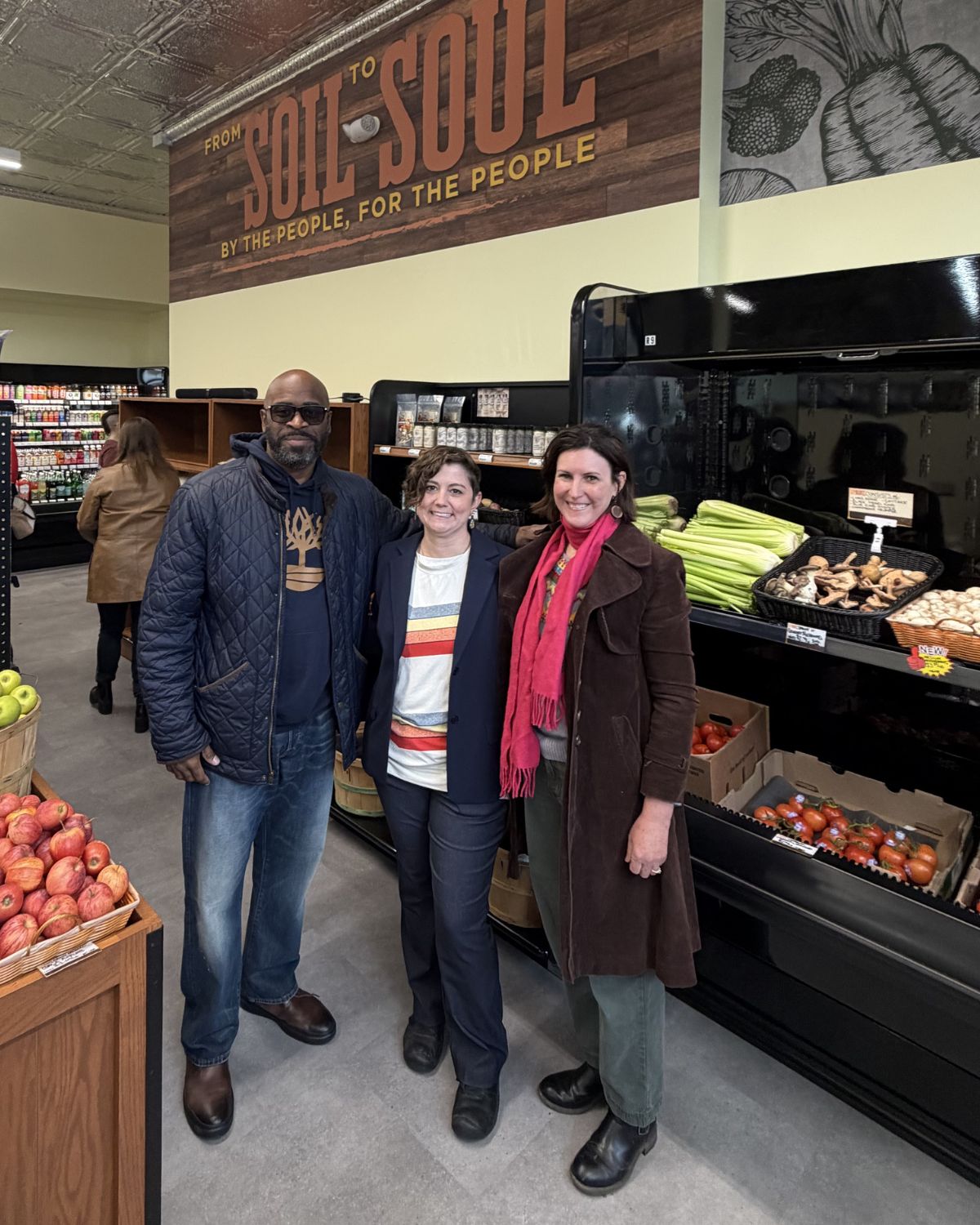
In Detroit’s North End, the Detroit People’s Food Co-op opened in 2024 as a long-awaited community-owned grocery store. Years in the making, the co-op is now a hub for fresh, healthy food and a model for what it looks like to center equity, local sourcing, and community ownership in food retail. Fair Food Network began supporting the co-op’s journey in 2015 through consulting and technical assistance and is proud to be part of the constellation of community partners and investors who helped support making the vision a reality. In 2025, Fair Food Fund continued our partnership with a working capital grant and a loan to install a new salad bar, creating an important new revenue stream for the business.

Untitled design (12)
Icon-Apple

Since opening in 2024, Detroit People’s Food Co-op has signed up more than 500 new Double Up Food Bucks participants.

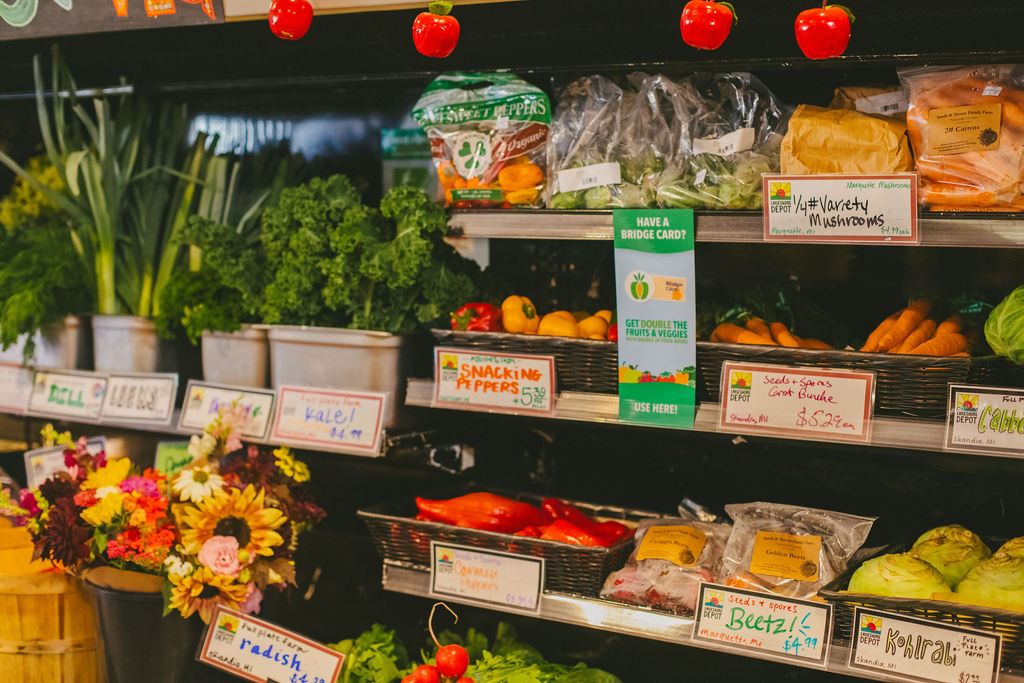
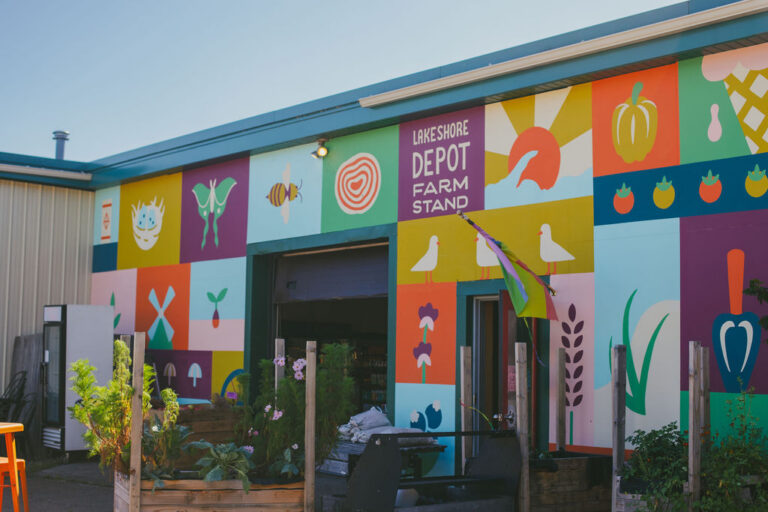
Uproot Market & Eatery, a new grocery concept in Battle Creek, is expanding access to fresh food in surrounding neighborhoods, while Lakeshore Depot in Marquette continues to grow its role as a trusted, locally focused grocer in the Upper Peninsula. Both businesses received financing from the Fair Food Fund that helped attract additional investors. That capital was paired with technical assistance from the Michigan Good Food Fund’s network of partners, demonstrating how coordinated investment and collaboration can help local grocers thrive while remaining responsive to the communities they serve.

Uproot (2)
Icon-Seeds

In addition to Fair Food Fund’s $250K loan to Uproot in late 2024, we provided a $200K loan guaranty in early 2025 that de-risked a $670K loan from Local Initiatives Support Corporation, bringing them into the Michigan Good Food Fund collaborative as a new official lending partner.

In addition to providing capital and hands-on support, we’re also finding creative ways to get funding directly to the businesses that need it most. For example, the 2025 Michigan Good Food Fund Seed Awards expanded to include grocers and food hubs.

Awardees included:
Country Style Marketplace (Port Huron)
GreenTree Co-op Market (Mt. Pleasant)
Kornr Store (Detroit)
Neighborhood Grocery (Detroit)
Peaches & Greens (Detroit)
Radical Plants (St. Clair Shores)
Ypsilanti Food Cooperative (Ypsilanti)


These 7 grocery/retail sites received Seed Awards totaling almost $100,000.

IMG_9035

Five stores in this round’s Seed Award winners offer Double Up Food Bucks to their customers, and all are advancing inclusive, community-first grocery models. These investments don’t just meet local needs — they help demonstrate approaches to food access that can be adapted and scaled elsewhere.

Places like Sullivan, New Hampshire, where we provided a loan to Sullivan Country Store, a community-centered grocer working to strengthen local supply chains and improve infrastructure — demonstrating how sustained investment can build long-term regional resilience.

“By supporting innovative food retailers like Sullivan Country Store,” said Fair Food Fund Director of Investments, Joel Moyer, “we’re strengthening the demand side of the food system — bringing local food to community shelves and ensuring families can access fresh, affordable choices where they live.”

These stories reflect more than just individual business success. They’re part of a growing network of retail innovation — backed by targeted support that aligns mission with market. Together, these stores prove that grocery can be both a viable business and a force for community well-being — and serve as a powerful reminder that when we invest in grocery, we invest in people.

Close Flyout

Highlight

Double Up Bonus Bucks: Healthy Food in a Time of Crisis

fnn-michigan-darkgreen

Michigan

When a sudden federal government shutdown paused SNAP benefits in November 2025, more than 1.4 million Michiganders faced the unthinkable: reduction or elimination of their SNAP benefits — hitting already strained family budgets.

The disruption came with little warning, rippling through local economies — especially in neighborhoods where small grocers and food retailers rely heavily on SNAP purchases — and leaving everyone from children and older adults to veterans and working families without the critical healthy food benefits they rely on. But in Michigan, a rapid, community-rooted response took shape — aimed at keeping healthy food on the table.

IMG_8695

With years spent building trust in communities, strengthening Double Up’s program infrastructure, and collaborating with statewide stakeholders, Fair Food Network was able to spring into action. Within days, the nonprofit launched Double Up Bonus Bucks, a special initiative that provided an extra $40 to Double Up participants — no SNAP match required.

“We knew we couldn’t wait,” said Rachel Hoh, Director, Double Up Food Bucks Michigan. “This wasn’t just a policy problem — it was a people problem. Families were losing benefits overnight. That meant immediate food insecurity and it sent economic shockwaves through the small grocers and local farmers who also rely on sales from the program. So, we stepped in with something practical, rooted in our relationships and ready to go.”

Backed by the State of Michigan’s Department of Agriculture and Rural Development and private contributions to Fair Food Network’s Resilience Fund — including support from the W.K. Kellogg Foundation, Marguerite Casey Foundation, and others who share our belief in food as a lever for health, equity, and economic strength — Double Up Bonus Bucks aimed to do three things: help families stretch their food budgets, put fresh food on their tables, and keep dollars flowing in stores and markets that operate the program.

More than just another opportunity to provide relief, Double Up Bonus Bucks was a carefully considered strategy to support both families and the food retailers they rely on.

“As a store owner, I’ve watched how Bonus Bucks made a real difference at checkout,” said Justin Morad, Director of
Operations at Garden Fresh Market Place in Detroit. In addition to the $40 toward fruits and vegetables, Double Up made key changes for the duration of the crisis: Benefits on the Double Up card no longer expired, the daily earning cap was lifted, and for the first time, frozen fruits and vegetables were eligible. Those changes were made possible thanks to the swift collaboration of grocery retailers and farmers market partners across the Double Up network, who invested extra staff time and resources to reconfigure their systems and implement Bonus Bucks in a matter of weeks. Their eagerness to bring these resources to their communities, paired with the trust they had in Fair Food Network and Double Up, meant real relief for families when they needed it most.

These are moments we’re built to respond to,” said Holly Parker, Fair Food Network CEO-Elect. “We’re prepared to meet needs during unexpected changes and work with our trusted partners to deliver solutions rooted in community, even in — especially in — times of crisis.

Governor Gretchen Whitmer applauded the initiative: “We know SNAP is a lifeline for Michigan families. These changes to the Double Up program will go a long way in ensuring access to healthy food can continue while we push our federal partners to reach a deal.”

The program ran through the end of December 2025, deploying more than $1 million dollars in Bonus Bucks across the state and enrolling more than 4,100 new program participants statewide and more than 1,100 in Detroit alone. More than a time-limited intervention, Double Up Bonus Bucks became a clear example of what’s possible when long-term vision meets fast, community-centered action. In a moment of national disruption, it served as proof that when strong policy infrastructure and public-private partnerships are in place, food systems can respond with resilience — and meet people where they are, when it matters most.

Close Flyout

Highlight

Investing in the Building Blocks of Fresh Food Access

fnn-michigan-purple

Michigan

With strawberries ubiquitous on supermarket shelves even in January, we tend to think of warm-weather states providing America’s fruit and vegetable bounty. A little-known fact is that Michigan, even with its northerly latitude and long winters, has the second most diverse agricultural output in the United States, offering more than 300 different commodities from more than 50,000 farms dotting the landscape from Detroit to the Upper Peninsula.

A resilient local food economy depends on people and the connections between them. At Fair Food Network, we invest in the local food economy from end to end: the farmers and producers growing the food, the food businesses and retailers processing and selling it, and the families bringing food home to their tables.

Because access to healthy, affordable food doesn’t happen on its own. It’s only possible when local farmers and food businesses have the resources, markets, and infrastructure they need to succeed, and when communities have the purchasing power to support them. That’s why our work focuses on strengthening the relationships that keep food dollars circulating locally and food systems working for everyone.

When farmers and food producers can sell closer to home, regional food systems grow more resilient, local economies grow stronger, and families gain greater access to fresh, nutritious food. “Strengthening the ties between producers, retailers, and families helps ensure that local food systems can meet community demand — today and over the long term,” said Fair Food Network CEO-Elect, Holly Parker.

IMG_8247
Icon-Barn

An estimated 600+ farmers benefited from participating in Double Up at farmers market.


Independent grocery retailers participating in Double Up purchased $8.6M in Michigan produce.

In many cases, building those connections requires investing in the infrastructure that brings the disparate parts of a regional food system together. In 2025, Damian’s Craft Meats advanced plans to open a local slaughterhouse facility in Manchester, Michigan, addressing a longstanding bottleneck for regional meat producers. Access to nearby processing is a critical link for farmers, helping them scale production, reduce reliance on distant processors, and keep more value within their communities.

Fair Food Network supported this next step with a bridge loan, line of credit, and technical assistance, helping Damian’s navigate real estate development, assemble a capital stack, and move its long-term vision closer to reality. “Damian’s is an exciting example of much-needed infrastructure for producers and farmers to grow their businesses and serve their communities. This is what building a resilient local food system looks like,” Parker emphasized.

Investments like this are part of a broader effort to strengthen the food businesses and infrastructure that keep local food systems moving. Since 2015, Fair Food Network has partnered in the Michigan Good Food Fund, and today serves as its administrative manager, helping expand access to capital and technical assistance for food and farm businesses across the state. Through this statewide lending network and the organization’s own Fair Food Fund, we help channel catalytic capital into mission-aligned food businesses, supporting
entrepreneurs as they grow their businesses, strengthen local economies, and expand access to healthy food in
their communities.

Alongside investments in critical infrastructure, our work also supports farmers and food businesses at earlier stages of growth across both rural and urban locations in Michigan. Through the Michigan Good Food Fund Seed Awards, we’re investing as part of the collaborative in the next generation of farmers and food entrepreneurs with early-stage support designed to help businesses take root.

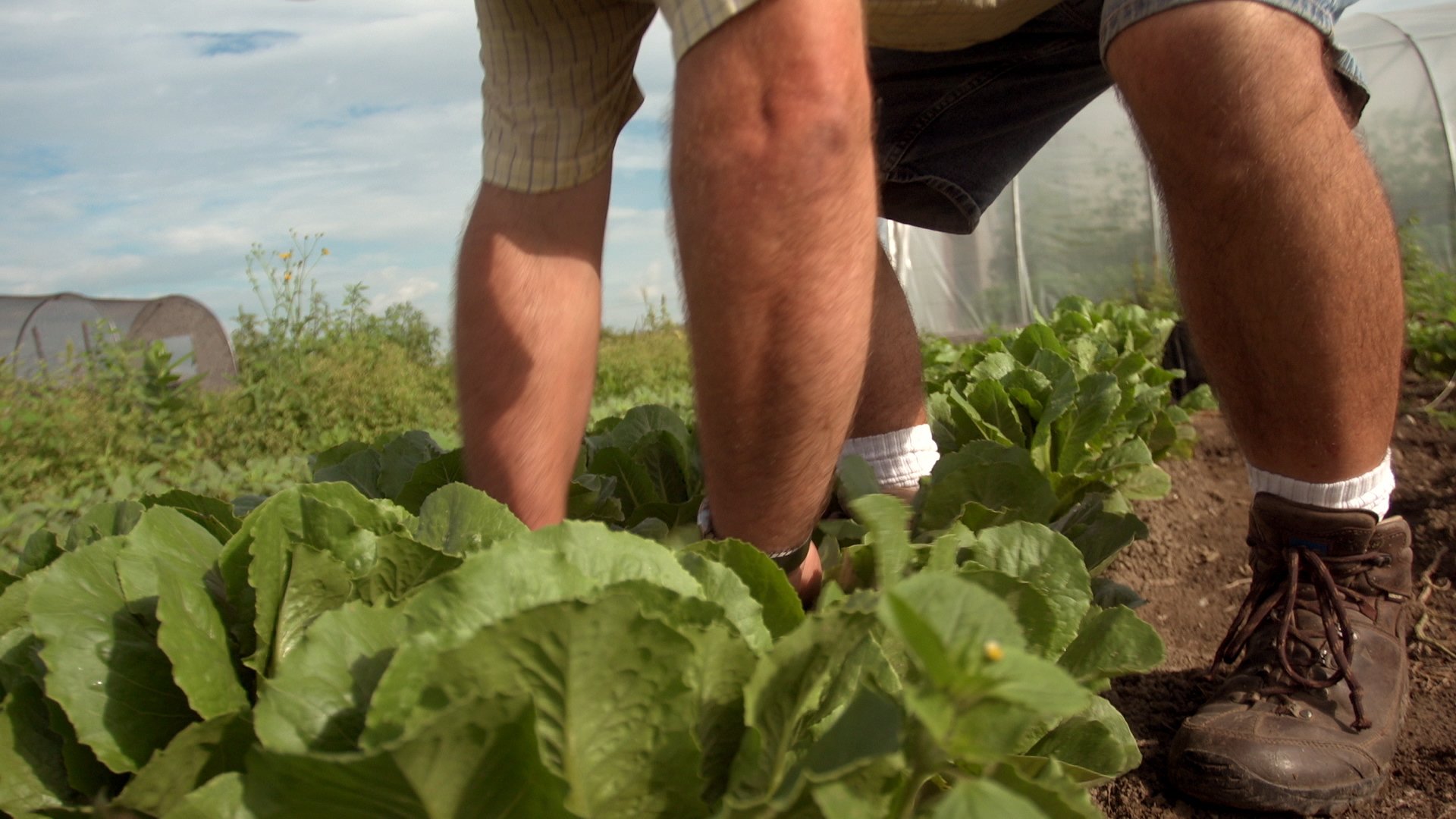
harvesting greens
Icon-Seeds

The five farmers below received Seed Awards totaling $85,000.

Recent recipients include Bear Creek Organic Farm in Petoskey and Lakeview Hill Farm in Traverse City, both of which operate full-scale farm stores; Grow Moore Produce Cooperative in Detroit, a farmer-owned cooperative expanding market opportunities; Dancing Crane Farm in Skandia, a diversified organic farm launching an incubator kitchen; and Whispering Wild Market Farm in Toivola, preparing to open an onsite storefront. Together, these investments reflect our commitment to helping local food businesses grow while expanding access to fresh food in their communities.

As businesses grow, access to capital is often the difference between momentum and missed opportunity. To address a critical opportunity for Michigan food businesses in 2025, Fair Food Fund — through its work as a partner in the Michigan Good Food Fund — issued bridge loans to food businesses awarded reimbursable government grants. While these grants represented significant opportunities, they required upfront equipment purchases that many small- and mid-sized food businesses simply couldn’t afford on their own.

Without immediate access to capital, these businesses risked losing out entirely,” said Fair Food Network Director of Investments, Joel Moyer.

Our bridge loans helped fill that gap, covering upfront costs while businesses awaited reimbursement. Recipients — including Agape Organic Farm, The Kilted Farmers, Torch Lake Co-op, Mitchell’s Patch of Blue, and Cultured Ferments Company — were able to move forward quickly, keep projects on track, and unlock public resources that would have otherwise remained out of reach.

IMG_9252
Icon-Farm Stand

Fair Food Fund’s bridge loans helped these 5 businesses secure just over $450,000 through the FSI grants.

In doing so, Michigan Good Food Fund “helped channel federal dollars into local food economies, where they support farmers, create jobs, and strengthen the systems that connect food producers to their communities,” said Moyer.

Taken together, these investments show how access to fresh food grows when the building blocks of local food systems are strong and connected. By investing in producers, food businesses, and the infrastructure that links them to nearby markets, Fair Food Network helps ensure that locally grown food can reach the communities ready to buy it — turning regional food systems into engines of health, resilience, and opportunity.

Close Flyout

Highlight

Building Capacity for a More Resilient Field

ffn-america-darkgreen

Nationwide

The GusNIP Training, Technical Assistance, Evaluation, and Information Center’s Nutrition Incentive Hub serves as the backbone for nutrition incentive and produce prescription programs across the country. Launched in 2019 to provide training, technical assistance, evaluation, and field-wide coordination for Gus Schumacher Nutrition Incentive Program (GusNIP) grantees, the Hub helps ensure that, beyond successfully launching, local programs have the resources they need to endure, adapt, and thrive.

Fair Food Network provides technical assistance and supports innovation for GusNIP-funded programs as a partner in the Nutrition Incentive Hub, led by the Center for Nutrition & Health Impact in collaboration with the University of California-San Francisco.

As part of this work, Fair Food Network administers the Capacity Building & Innovation Fund (CBIF), a competitive awards program designed to strengthen the long-term sustainability of nutrition incentive and produce prescription initiatives. In 2025, the overarching theme of the awards was a focus on helping grantees build stronger operational foundations, close emerging gaps, and position their programs for resilience in an evolving funding and policy landscape.

This year’s recipients demonstrate how targeted investments in capacity can unlock lasting impact.

DSC_1154
Icon-Dollar

This year’s 11 recipients received a total of $463,247 through the CBIF.

In Washington, DC, DC Central Kitchen received support for a strategic technology investment aimed at improving its ordering system for corner stores participating in its nutrition incentive program. By modernizing and streamlining this infrastructure, DC Central Kitchen is helping neighborhood retailers increase local sourcing while making it easier to stock and sell fresh produce. “The investment in DC Central Kitchen strengthens supply relationships, reduces friction in ordering, and supports a small retailer serving a community with limited healthy food access,” said Fair Food Network’s Senior Director of Nutrition Incentives, Erica Christensen Raml.

Investments like these illustrate how the Capacity Building & Innovation Fund fuels essential — if not always visible — backend innovations that benefit retailers, farmers, and consumers alike,” said Mike Curtain, Jr., Chief Executive Officer.

Curtain adds: “After a two-year span in which orders of our healthy produce jumped by 20%, the innovation and adaptability fueled by this grant were essential to the continued success of our nutrition incentive programming.”

That flexibility has made an impact on the ground: “By simultaneously empowering small businesses to rapidly respond to consumer needs and equipping our staff to meet partner demands in a more timely, efficient fashion, we’re making our healthy retail food offerings more accessible and responsive than ever before,” said Curtain.

In rural West Virginia, Williamson Health and Wellness Center (WHWC) is using its CBIF award to deepen the impact of its produce prescription program. Serving a community facing persistent health and economic challenges, the Center is building staff capacity and launching a health coach training initiative to expand nutrition education and patient support. This work comes at a critical moment, as shifts in federal funding have created new gaps in nutrition education services.

As a doctor of osteopathy and the CEO of WHWC, Dr. Beckett shared, “I believe our responsibility is not only to treat disease but also to cultivate health. We try to address the full picture of a person’s life and encourage a healthy diet.” By investing in local workforce development and integrating nutrition support into clinical care, Williamson is strengthening its ability to help patients manage chronic disease while reinforcing the long-term sustainability of its program.

Meanwhile, in the Hudson Valley region of New York, the Glynwood Center for Regional Food and Farming is focusing
on the future of its nutrition incentive program by evaluating and refining outreach, recruitment, and customer enrollment strategies. Working closely with farmers and CSA programs, Glynwood is building a stronger evidence base to ensure that incentives effectively reach and retain participants. Their work reflects a growing recognition by practitioners across the field: Sustainability depends not only on funding, but on effective engagement strategies and clear pathways for participants to continue to access the program. “For us at Glynwood, sustaining CSA is a SNAP is about nurturing relationships, trust, and cultural connection,” shared Michelle Lynn Hughes, Director of Regional Food Programs at Glynwood Center for Regional Food and Farming.

When nutrition incentive programs reflect the rhythms, foods, and values of the communities they serve, that’s when participation truly takes root and lasts, ” said Hughes.

Together, these projects reflect the core purpose of the Capacity Building & Innovation Fund: to invest in the people, systems, and strategies that make nutrition incentives and produce prescriptions durable and adaptable. By strengthening the operational and strategic foundations of local programs, the Hub is helping build a more resilient national network — one that can continue expanding access to healthy food while supporting farmers, retailers, and communities for years to come.

Close Flyout
Skip to content

2025

Fair Food Network

IMPACT REPORT

A Message from CEO Kate Krauss

This past year unfolded against a backdrop of profound social, economic, and political uncertainty. Communities navigated rising costs, strained public systems, and deep divisions, often all at once. In the midst of this upheaval, food remains something we all depend on. It’s a shared foundation that connects families, farmers, retailers, and communities, especially when other systems fall short.

Across our work this year, we saw how food can meet immediate needs while also strengthening the foundations communities rely on over time. Food supports health, sustains livelihoods, and keeps local economies moving, even when conditions are volatile. That’s why Fair Food Network continues to invest in food as both a near-term solution and a long-term strategy for resilience and opportunity.

In 2025, your support helped move our mission forward in meaningful ways. Together, we helped more families access healthy food, strengthened local food businesses, and invested in a food and farm system better prepared to weather future disruptions. Time and again, we saw what’s possible when communities have the resources they need, from families filling their tables with fresh, local food to farmers and food entrepreneurs growing businesses that sustain local economies. Throughout this report, we’ll share a few stories that bring this impact to life.

I will be stepping down from my role as CEO at the end of April 2026. It has been a privilege to serve alongside such dedicated partners, supporters, and staff. I’m thrilled that Holly Parker, our Chief Strategy & Program Officer, will step into the role of CEO in May. Holly has been a vital leader in our organization for nine years, and she brings the vision, expertise, and commitment needed to build on nearly two decades of progress.

With gratitude,

Kate_FFN Website Signature Image (1)
Kate's signature

Kate Krauss
CEO, Fair Food Network

A Message from CEO-Elect Holly Parker

I’m honored and excited to become CEO at Fair Food Network. I’m proud to have led program strategy at the organization for nearly a decade, and I look forward to creating more positive change through food alongside an incredible team and partners like you.

The belief in the power of food for good has guided Fair Food Network since the beginning. Our work has shown what happens when local food is deeply connected to the communities it serves. Families are nourished by food grown in their region. Farmers and food businesses gain new opportunities. And more food dollars stay in local economies.

When those connections are strong, the benefits ripple outward. People are healthier. Local businesses are more resilient. Communities are better prepared for whatever challenge comes next.

Our new strategic vision will deepen our roots in Michigan while expanding our national influence. As we shaped this vision, we asked some fundamental questions about what’s possible when communities come first and when food is treated as essential infrastructure, not an afterthought.

What if more of our food economy was local? What if families could fill their tables with food grown nearby, small and mid-sized farmers could thrive, and resilient local supply chains could carry us through the next disruption, and the one after that?

These questions are shaping our strategy and the work ahead. Answering them will take all of us.

Thank you for being part of this community and for helping us grow community health, wealth, and resilience through food.

With appreciation,

Holly_FFN Website Signature Image (1)
Holly Parker_Signature

Holly Parker
CEO-Elect, Fair Food Network

Healthy People, Thriving Economies, Resilient Food & Agriculture

Across the US, communities are building something powerful. In the places people live, work, and eat, we see innovation, determination, and resilience shaping food systems that work better for everyone. From farms to markets to corner stores, the food system is showing up for people — and people are showing up for each other.


At Fair Food Network, we support the building blocks that make local food systems possible: growers, retailers, food businesses, and the families they serve. Getting local food from farm to table takes a whole chain of partners, and we’re strengthening every link in that chain to make it fair and more effective. When communities choose local, they’re not just putting food on the table — they’re investing in jobs, farms, and businesses that build health and wealth in their own community.


From rural towns to urban neighborhoods, that choice is reshaping communities across the country. Looking ahead, we’re shaping our next chapter around increasing access to healthy food and expanding demand for local food — so more communities can benefit from what’s already taking root. The momentum is real, and it’s being led by communities themselves.


See how this work is taking root — and how communities are leading the way.

By The Numbers: Nutrition Incentives

NUTRITION INCENTIVE HUB

Organizations supported through our Nutrition Incentive Hub technical assistance and innovation work.

GusNIP grantees in 2025 — up from just 23 in 2019 when the Nutrition Incentive Hub was launched to strengthen these programs, expand their reach, and maximize their impact.
ffn-2025-fruit-icon

By The Numbers: Double Up Michigan

16 YEARS OF IMPACT

$

Total produce bought through Double Up and SNAP benefits

M

Estimated pounds of produce bought
with Double Up and SNAP benefits

The McGregor Fund's partnership with Fair Food Network is motivated by our shared commitment to support community vision and sustainable investment in Detroit's resilient food system. The Fund appreciates Fair Food Network’s ongoing support of Detroit’s incredible food justice leaders as they work together to grow community health, wealth and resilience.”

– Double Up Food Bucks participant,
Wayne County, Mich.

2025 IMPACT NUMBERS

$

Total produce bought through Double Up and SNAP benefits

Double Up sites

including 120 grocery stores and 124 farmers markets

Estimated SNAP households reached

%

of Michigan’s population lives in a county with a Double Up site

Estimated Michigan farmers benefited

$M

of Michigan-grown produce purchased by participating independent grocers
The McGregor Fund's partnership with Fair Food Network is motivated by our shared commitment to support community vision and sustainable investment in Detroit's resilient food system. The Fund appreciates Fair Food Network’s ongoing support of Detroit’s incredible food justice leaders as they work together to grow community health, wealth and resilience.”

Heidi Alcock, Vice President of Strategy & Grants Portfolio, McGregor Fund

Impact Investing

We are supporting vibrant communities and strong local economies by investing in food businesses that are creating positive change.

By The Numbers: Impact Investing

FAIR FOOD FUND FINANCIAL OVERVIEW

Financing Committed

(through Dec. 31, 2025)

$

Financing Outstanding


$

Investment Income


$

Total portfolio investments since inception


Loss rate as of Dec. 31, 2025: The annualized loss rate since the Fund’s inception (2012) is .91% or 12.5% cumulatively. This includes all realized write-offs on an investment capital pool of $10.8 million.

Type of Business

Type of Structure

Owner Demographics Race

Owner Demographics Gender

Fair Food Network
Consolidated Financials

Open or CloseStatement of Financial Position

Assets

Cash

$6,518,747

Accounts & Grants Receivable

$5,855,906

Investments

$10,779,241

Other Assets

$471,356

Total Assets

$23,625,250

Liabilities and Net Assets Expenses

Accounts Payable

$1,872,902

Other Liabilities

$3,093,075

Loans Payable

$4,339,805

Unrestricted net Assets

$8,350,020

Restricted Net Assets

$5,969,448

Total Liabilities and Net Assets

$23,625,250

Open or CloseStatement of Activities

Revenue

Government Grant Income

$9,213,937

Non-Government Grant Income

$3,456,000

Investment Income

$760,865

Other Income

$340,746

Total Income

$13,771,548

Expenses

Program Operating Expenses

$5,614,973

Technical Assistance Expenses

$174,774

Grants to Others

$6,872,791

Investment Expenses

$349,898

Other Expense

$425,873

Total Expenses

$13,438,309


Net Income

$333,239

Our Impact by the Numbers: Fair Food Network

We know that farmers and local food businesses are engines for positive change, so we support and invest in their success. Our work focuses on shifting how essential resources flow through the food economy, growing opportunities in communities across the country.

Total number of businesses receiving resources from Fair Food Network

Total hours of technical assistance provided to food businesses and organizations in 2025

$

Total dollars invested into communities by Fair Food Network

Tracking Our Progress Toward Our Mission

Fair Food Network measures the impact of our work against our mission to grow community health, wealth, and resilience through food. We track short-term progress across three outcome areas that reflect the changes we aim to create in communities and food systems.

supporters-grapes

Healthy people

This outcome area focuses on increasing resources for businesses that expand access to healthy, affordable food so more people in underserved communities can buy and eat fresh fruits and vegetables.

NUMBER BUSINESSES – ORGANIZATION-WIDE TOTAL: 625

Impact Investing: 64

Double Up Michigan: 244

Nutrition Incentive Hub: 328

Dollars Invested – Organization-wide Total: $7,841,706

Hours of Technical Assistance Provided: 884

seeds-1

Thriving Economies

This outcome area focuses on increasing resources for locally rooted food businesses so they can stabilize, grow, and strengthen their local economies.

NUMBER BUSINESSES – ORGANIZATION-WIDE TOTAL: 325

Impact Investing: 100

Double Up Michigan: 236

Dollars Invested – Organization-wide Total: $7,779,150

Hours of Technical Assistance Provided: 1,058

seeds-1

Resilient Food and Agriculture Systems

This outcome area focuses on increasing resources that strengthen local food infrastructure. This helps connect more local products to markets and builds stronger regional food systems.

NUMBER BUSINESSES – ORGANIZATION-WIDE TOTAL: 948

Impact Investing: 77

Double Up Michigan: 882

Dollars Invested – Organization-wide Total: $7,949,485

Hours of Technical Assistance Provided: 677

Supporting Fair Food Network is one of our most rewarding philanthropic activities. Their work to improve communities' health, wealth and resilience through food supports people in ways that magnifies dignity and is sustainable because it empowers entrepreneurs within those communities."

John Stewart, Fair Food Network Board Member and Donor

ffn-icons-seeds

Our Supporters

Our enduring gratitude for our supporters who help make this impact possible. With your partnership, we’re growing a future where everyone has access to healthy food, economic opportunity, and a resilient food and agriculture system.

OUR BOARD

Gary Appel, Advisor, W.K. Kellogg Foundation Community
Leadership Network

Erik Bakker, EVP & Chief Commercial Loan Officer,
Bank of Ann Arbor

Benita Melton, Director, Youth Development

Kwaku Osei, Executive Director, The LOVE Building & Co-Founder,
Farmacy Food

John Stewart, Technology Executive

Dan Warmels, CPA, Co-Founder, Warmels & Comstock

W. DeWayne Wells, Executive Director, Economic Justice Alliance of Michigan

Sarah L. Wixson, Litigation Partner, Varnum Attorneys at Law

EXECUTIVE TEAM

Kate Krauss, CEO

Holly A. Parker, CEO-Elect

Cassandra Fletcher-Martin, Chief Financial Officer

Kellie Boyd, Vice President of People & Culture

INVESTMENT COMMITTEE

Chris Bentley, Impact Fund Manager, Serious Change Investments & Sustain VC

Cassandra Fletcher-Martin, Chief Financial Officer, Fair Food Network

Michael Rozyne, Founder & Evangelist, Red Tomato

Daniel Tellalian, Founder & CEO, Angel City Advisors

Dan Warmels, CPA, Shareholder, Clark Shaefer Hackett

INSTITUTIONAL FUNDERS

$500,000 and above

Clif Family Foundation
Marguerite Casey Foundation
Michigan Department of Agriculture & Rural Development (MDARD)
Ralph C. Wilson, Jr. Foundation
Reinvestment Fund - Healthy Food Finance Initiative
United States Department of Agriculture (USDA)
W.K. Kellogg Foundation
You Have Our Trust Fund of New Hampshire Charitable Foundation

$250,000 to $499,999

Ann Arbor Area Community Foundation
Charles Stewart Mott Foundation
Max M. & Marjorie S. Fisher Foundation
New York State Health Foundation
Swift Foundation

$100,000 to $249,999

Community Foundation for Southeast
Michigan-New Economy Initiative
Ford Philanthropy
McGregor Fund
Michigan Health Endowment Fund
Oakland County Health & Human Services
Skillman Foundation

$25,000 to $99,999

Community Foundation of Greater Flint
Dalio Philanthropies
Domino’s Pizza
Mighty Arrow Family Foundation
Ruth Mott Foundation

Up to $24,999

Americana Foundation
Amway
Anonymous
Dominican Sisters of Grand Rapids
Food and Nutrition Resource Foundation

Thank you to our Donor Advised & Investment Fund Platform Partners 

CapShift
Chordata Capital
Natural Investments, LLC

INDIVIDUAL DONORS

$25,000 and above

Anonymous
Anonymous
Noon Whistle
Oran Hesterman & Lucinda Kurtz

$10,000 to $24,999

David D. Fukuzawa & Toni Kovach
Hamp Family Fund
Melissa McPheeters

$5,000 to $9,999

Phillip Wm. Fisher
Paul & Judy Freedman
Dave Ligotti & Karen Quenneville
John Stewart & Ramon Torres

$1000 to $4999

Gary & Mimi Appel
Kenneth Fisher
Thadd Gormas
Janet Katz
Bill & Sally Martin
Gary & Nancy McRay
Devesh Poddar
Timothy Richards & Constance McGuire
Brian Weisman & Kimberly Burton
Peter Welles

$250 to $999

Kellie Boyd
Michael Carosello
John & Margie DeVine
Todd & Judith Endelman
Cassandra Fletcher-Martin
Brian Harrison
Naomi Harrison
Jenine Hinkle
Kate Krauss
Lori London
Peter & Deb Nathan
Tim & Kate Partridge
Alessandro Sacilotto
Rose Tantraphol
W. DeWayne Wells

Up to $249

Elizabeth Alpern
Suzanne Angeo
Alexander Carr
Katherine Coppens
Henna Culbertson
Timothy Donovan
James Ellis
Elizabeth Erfert
Abrams Family
Marissa Fellows
Katherine Forsythe
Gillian Gainsley
Hannah Grall
Judith Grego
Jenny Hall
Idelle Hammond-Sass
Dan Horn
Lara Keathley
Elizabeth Ketaineck
Alistair Kiyingi
Maria LaLonde
Russell Leino
Samuel Lieber
Irving Lum
Darci McConnell
Maria Mendez

Erin Michon
Joel Moyer
Scott Moyer
Andi Nank
Rebecca Nelson
Gail Offen
Dennis Oney
Phillip & Sally Parker
Sara Persechino
Bonnie Reece
Charles Rose
Jessica Roy
Harrison Saunders
Sandra Schrah
Robert Schumaker
Lisa Sebesta
Loretta Smith
Stephanee Strasburg
Omari Taylor
Megan & Marcus Thygeson
Brenda Turner
Tyler Vens
Pasquale Vignola
Micah Warschausky
Suzanne Zelnik Geldys
Sarah Zettel

Join Us

We believe that food is a powerful starting point for change — sparking collaboration, strengthening communities, and opening doors to new possibilities. Whether you’re a food entrepreneur, donor, funder, investor, policymaker, frontline practitioner, or another changemaker, we’re ready to partner with you to drive both immediate impact and lasting systems change.

Join us in growing community health, wealth, and resilience through food.

Stay In Touch

Thank you to contributors to this report: writer Adam Robson; designers at Loop: Design for Social Good and EmSi Branding Design. Photography is courtesy of Fair Food Network and/or subjects.

Dig into past impact reports from Fair Food Network, featuring stories from the field: